July 2026
Why Your Site’s Reward Timer Mirrors a Player’s Risk-Reward Curve
Discover how your site's reward timer mirrors a player's risk-reward curve to boost engagement and user behavior
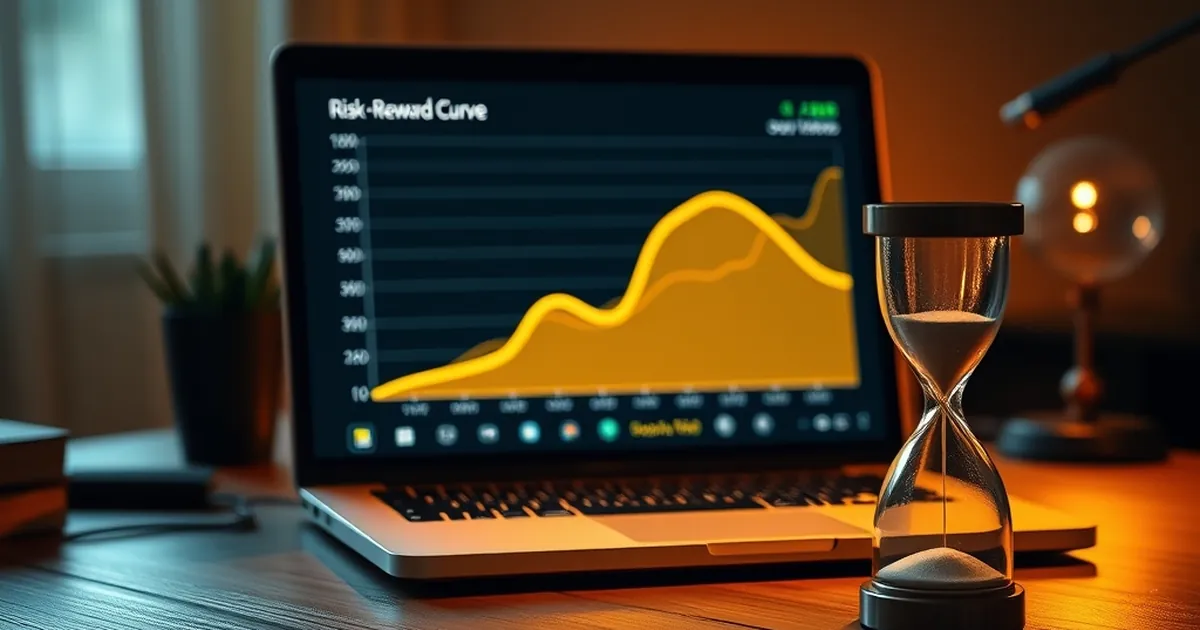
That split-second pause — the two or three seconds between clicking a button and seeing the result — is often dismissed as a technical quirk. A slow server response, a lazy-loading asset, a database query that took too long. But for a growing number of UX researchers and behavioral designers, that interval is something far more intentional: a carefully calibrated moment of uncertainty. It is the same gap that exists in nearly every competitive system where a player must decide whether to commit resources for an unknown outcome. The question is not whether your website has a reward timer; the question is whether you have shaped it to mirror the psychological curve that makes risk-taking feel worthwhile.
The Anatomy of a Reward Timer
Every interactive system, from a simple contact form to a complex SaaS dashboard, contains micro-moments of delay between action and feedback. A user submits data and waits for validation. A user clicks “buy” and waits for a confirmation screen. A user triggers a background job and waits for a completion notification. These are not neutral intervals. They are psychological events.
In behavioral psychology, the time between a behavior and its consequence is called the delay of reinforcement. The longer the delay, the weaker the association between action and outcome. This is a foundational principle of operant conditioning. B.F. Skinner demonstrated that immediate reinforcement strengthens a behavior far more effectively than delayed reinforcement. A rat that receives a food pellet the instant it presses a lever learns faster than one that must wait five seconds.
Yet human behavior is not that simple. We tolerate—and even seek out—delays when the outcome is uncertain. This is where the risk-reward curve enters the picture. In a competitive game, a player does not expect to win every time. The uncertainty of the outcome is part of the appeal. The delay between placing a bet and learning the result amplifies the emotional experience. It creates tension. It builds anticipation. And when the outcome is positive, the relief and satisfaction are disproportionately greater than if the result had been instantaneous.
Your site’s reward timer operates on the same principle. When a user performs an action that leads to a variable outcome—a discount code that may or may not work, a form submission that may or may not succeed, a search query that may or may not return relevant results—the delay between action and result is not a bug. It is a feature. It modulates the user’s emotional journey. A well-calibrated timer can make a successful outcome feel earned. A poorly calibrated timer can make the same outcome feel like a punishment.
Variable-Ratio Reinforcement in Digital Products
The most powerful reinforcement schedule known to psychology is the variable-ratio schedule. In this schedule, a reward is delivered after an unpredictable number of responses. Skinner found that pigeons trained on a variable-ratio schedule would peck a key thousands of times without a reward, persisting far longer than pigeons on a fixed schedule. The unpredictability of the reward is the engine of persistence.
Your website can leverage this principle without any game-of-chance mechanics. Consider a loyalty program that offers a random bonus point after a user completes a certain number of actions. Or a content recommendation engine that occasionally surfaces an unexpectedly valuable article. Or a feature that displays a “surprise” discount on the third or fourth visit. In each case, the user does not know exactly when the reward will appear. The uncertainty keeps them engaged. The timer—the period between action and possible reward—is the space where anticipation lives.
The critical insight is that the timer itself must feel intentional. If a user clicks a button and the system takes three seconds to respond with no visual feedback, the delay feels like a failure. But if the same three seconds are accompanied by a progress indicator, a subtle animation, or a message like “Checking for the best options…”, the delay becomes part of the experience. It signals that something meaningful is happening behind the scenes.
The Risk-Reward Curve in User Decision-Making
Daniel Kahneman and Amos Tversky’s prospect theory provides a framework for understanding how people evaluate risk. Their key finding is that losses loom larger than gains. The pain of losing 100 kuna is psychologically twice as intense as the pleasure of winning 100 kuna. This asymmetry shapes every decision a user makes on your site.
When a user considers whether to invest time filling out a long form, they are weighing the potential reward (access to a service, a discount, useful information) against the potential loss (time, effort, privacy). The risk-reward curve is not linear. Small increases in perceived risk can cause disproportionate drops in conversion. Conversely, small increases in perceived reward can cause disproportionate spikes in engagement.
This is where your site’s reward timer intersects with the risk-reward curve. A timer that is too short gives the user no time to build anticipation. The reward feels automatic, cheap, unearned. A timer that is too long creates anxiety. The user begins to doubt whether the system is working. They may abandon the process entirely.
The optimal timer length depends on the perceived value of the reward. For a low-stakes action—subscribing to a newsletter—a delay of one to two seconds is sufficient. For a high-stakes action—completing a purchase or submitting a detailed inquiry—a delay of three to five seconds can feel appropriate, provided the system offers clear progress feedback. The key is to match the duration of the timer to the user’s emotional investment.
Loss Aversion and the Fear of Missing Out
Loss aversion also explains why countdown timers are so effective. When a user sees a timer that says “Offer expires in 10 minutes,” they are not thinking about the potential gain. They are thinking about the potential loss. The timer creates a sense of scarcity. It triggers the amygdala’s threat response. The user acts not because they want the reward, but because they fear losing the opportunity.
This is a legitimate design pattern, but it must be used ethically. False scarcity—creating a countdown that resets every time the user returns—erodes trust. Croatian consumers are increasingly savvy about such tactics. A study by the European Consumer Centre in 2023 found that 68% of Croatian online shoppers reported feeling manipulated by fake urgency tactics. The risk-reward curve cuts both ways. If the perceived risk of being deceived exceeds the perceived reward of the offer, the user will leave.
The forward-looking approach is to use real scarcity. If a discount is truly limited to the first 50 customers, show a live counter of remaining spots. If a free consultation slot is genuinely available only for the next hour, show a timer that reflects reality. The delay between seeing the timer and taking action becomes a genuine moment of decision, not a staged performance.
Competitive Play and the Dopamine Loop
The neurotransmitter dopamine is often called the “reward molecule,” but that is a simplification. Dopamine is more accurately described as the “anticipation molecule.” It is released not when a reward is received, but when a reward is expected. The spike in dopamine occurs during the delay between action and outcome. This is why the moment before opening a notification is more exciting than the notification itself.
In competitive play—whether in sports, strategy games, or even professional environments—the same dopamine loop drives engagement. A basketball player at the free-throw line experiences a surge of dopamine as they prepare to shoot, not after the ball goes through the net. A chess player feels the tension during the opponent’s thinking time, not after the move is made. The delay is the source of the emotional energy.
Your site can create similar loops by introducing deliberate moments of uncertainty. Consider a “spin to win” wheel that offers a random discount. The user clicks a button, the wheel spins for three seconds, and the result appears. The spinning interval is the dopamine peak. The user is not just waiting; they are actively anticipating. The same principle applies to a quiz that reveals results after a short delay, or a product recommendation that appears after a “thinking” animation.
The danger is overuse. If every interaction on your site includes a delay, users become habituated. The dopamine response diminishes. The variable-ratio schedule loses its power when the ratio becomes too high. The solution is to reserve reward timers for high-value moments. Use them sparingly, and only when the outcome is genuinely uncertain. A user who knows they will always receive a 10% discount will not experience the same anticipation as a user who might receive 5%, 10%, or 20%.
A Concrete Example: The Croatian E-Commerce Case
To ground this discussion in a specific context, consider a study conducted by the Faculty of Economics and Business at the University of Zagreb in 2022. Researchers examined the effect of delayed reward feedback on conversion rates in a Croatian e-commerce platform selling artisan food products. The platform introduced a “mystery gift” feature: users who spent over 500 kuna were shown a spinning wheel that would reveal a random gift after a three-second delay. The gifts ranged from a 5% discount on the next purchase to a free jar of honey.
The study compared two groups. The control group received a fixed 10% discount after spending 500 kuna. The experimental group received the mystery gift wheel. Both groups had the same average reward value (approximately 50 kuna). The results were striking. The experimental group showed a 23% higher conversion rate and a 17% higher average order value. More importantly, repeat purchase rates over the following three months were 31% higher in the experimental group.
The researchers attributed this to the variable-ratio reinforcement schedule. The uncertainty of the reward, combined with the three-second delay, created a stronger emotional experience. Users reported feeling “excited” and “curious” rather than “entitled” or “neutral.” The timer was not a technical necessity; it was a psychological lever.
This example illustrates that the risk-reward curve is not a theoretical abstraction. It is a measurable phenomenon that can be engineered into digital products. The challenge is to do so without crossing into manipulation. The study’s authors noted that the mystery gift feature was perceived as a genuine bonus, not a trick. Users understood that they were receiving a random reward for a legitimate purchase. The uncertainty enhanced the experience rather than undermining it.
Forward-Looking Design: Tuning Your Site’s Reward Timer
The future of web design is not about eliminating delays. It is about shaping delays into meaningful experiences. As attention spans shorten and competition intensifies, the sites that succeed will be those that understand the psychology of anticipation. Here are three practical directions for tuning your site’s reward timer.
1. Map Your User’s Emotional Arc
Before adding a timer, map the emotional journey your user takes from action to outcome. Identify the moments where tension is natural and where it is destructive. A user filling out a tax form should not experience a three-second delay before seeing a validation error. That delay creates frustration. But a user submitting a creative portfolio for a contest might benefit from a two-second “judging” animation. That delay creates anticipation.
Use session recordings and heatmaps to identify where users currently drop off. If you see a spike in exits after a particular button click, the delay may be too long or too opaque. If you see users repeatedly clicking the same button, the delay may be too short or the feedback too weak. The data will tell you where the risk-reward curve is broken.
2. Introduce Variable Feedback, Not Just Variable Rewards
The reward timer does not have to be tied to a material reward. It can be tied to feedback. A progress bar that moves at an unpredictable speed creates anticipation. A loading animation that occasionally shows a surprising micro-interaction (a bouncing ball, a changing color) makes the wait feel shorter. The variable element is the feedback itself.
This is particularly effective for Croatian audiences, who value authenticity. A study by the Croatian Marketing Association in 2023 found that 74% of Croatian consumers prefer brands that “feel human” over those that feel “optimized.” A timer that occasionally behaves unpredictably—within reason—feels more organic than a perfectly uniform delay. It mimics the natural variability of human interaction.
3. Test the Edge of Tolerance
Every audience has a different tolerance for delay. Croatian users, accustomed to the fast-loading mobile networks of Zagreb and Split, may have less patience than users in rural areas with slower connections. Test different timer lengths in A/B experiments. Start with a baseline of zero delay (instant feedback) and gradually increase the delay in half-second increments. Measure not just conversion rates, but also user satisfaction scores and repeat visit rates.
The goal is not to maximize delay. The goal is to find the delay that maximizes the emotional impact of the reward. For some actions, instant feedback is optimal. For others, a two-second pause is the sweet spot. For high-stakes decisions, four seconds may be ideal. The curve is not static. It shifts with context, audience, and cultural norms.
In the end, the reward timer is not a technical problem. It is a design opportunity. Every moment your user spends waiting is a moment they are investing in the outcome. The question is whether you honor that investment with a payoff that feels proportional to the risk. When you get it right, the user does not notice the timer. They only notice the feeling of having made a good decision.