August 2026
Why Your App’s Risk-Reward Ladder Breaks at Step 7
Discover why user engagement collapses at step seven and how to fix your app’s risk-reward design before retention falls off a cliff
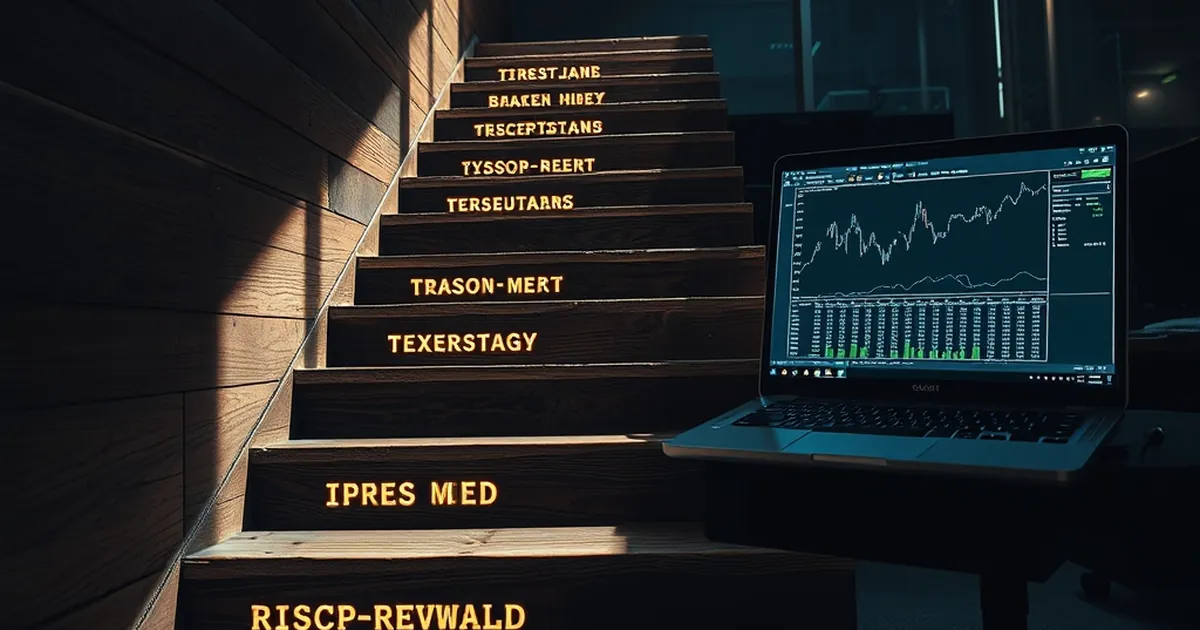
The question isn’t whether your users enjoy a challenge—they do. The question is why the carefully calibrated escalation of difficulty and reward that works so beautifully in the first six steps of your onboarding or gamified feature suddenly collapses into frustration, abandonment, or outright hostility at step seven. You’ve done everything right: you’ve mapped the user journey, applied the principle of variable rewards, and even borrowed from the playbook of loss aversion. Yet the data shows a cliff. The retention curve doesn’t slope downward gracefully; it falls off a ledge. This isn’t a design flaw in your UI, nor a bug in your code. It’s a fundamental misunderstanding of how human decision-making under uncertainty actually operates when the stakes—perceived or real—cross a specific psychological threshold. In this article, we’ll dissect why that threshold exists, why it’s almost always located around the seventh interaction, and what you can do to rebuild your ladder so it doesn’t break under the weight of cognitive reality.
The Myth of the Smooth Difficulty Curve
Most developers and designers intuitively think of progression as a linear or exponential curve. Step one: easy task, immediate reward. Step two: slightly harder, slightly bigger reward. Step three: introduce a new mechanic. Step four: combine mechanics. Step five: add a time constraint. Step six: add a social element. Step seven: require mastery, and offer the "big" reward.
This feels logical. It’s how we were taught to structure learning, from piano lessons to calculus. But this model is fundamentally flawed when applied to digital products because it ignores the single most important variable: the user’s perception of their own agency. In the first six steps, the user is learning the rules of your system. They are reacting to prompts, clicking buttons, and receiving feedback. The locus of control is external—they are doing what the app asks. At step seven, however, the design typically shifts from teaching to testing. The user is no longer following a script; they are being asked to perform under conditions of uncertainty. The reward is no longer a guaranteed breadcrumb; it’s a conditional jackpot.
This is where the psychological wheels come off. According to the research on the Zeigarnik Effect, people remember uncompleted or interrupted tasks better than completed ones. But that effect only works if the user believes they can complete the task. When you hit step seven, you’re not just asking for effort; you’re asking the user to make a risk assessment. And here’s the kicker: humans are notoriously terrible at assessing risk when the probability of success drops below a certain threshold, even if the absolute numbers are in their favor.
Consider the work of Daniel Kahneman and Amos Tversky on Prospect Theory. Their core finding wasn’t just that people fear losses more than they value gains (loss aversion). It was that the weighting of probabilities is non-linear. People tend to overweight small probabilities of winning and underweight moderate probabilities. When you reach step seven, you’ve typically designed a challenge with a success rate of, say, 60-70%. Under Prospect Theory, a user doesn’t perceive that as a 65% chance of success. They perceive it as a high-stakes gamble where the pain of losing (losing progress, losing time, losing face) outweighs the pleasure of the reward by a factor of two to three. The risk-reward ladder breaks because you’ve unknowingly switched from a system of guaranteed reinforcement to a system of probabilistic reinforcement—and you didn’t adjust the psychological contract.
The Step 7 Threshold: Where Variable-Ratio Reinforcement Backfires
Let’s get specific about the mechanics. In behavioral psychology, the most powerful and durable reinforcement schedule is the variable-ratio schedule. This is the principle behind why slot machines are addictive: you don’t know when the reward is coming, only that it might come. It creates a high rate of response and is extremely resistant to extinction.
Developers often try to mimic this in apps. "Give a bonus every 3-5 actions," or "randomly award a badge for completing a sequence." This works beautifully in the early stages. The user is engaged, the dopamine hits are unpredictable but frequent. However, there is a critical flaw when you apply this to a ladder structure. A ladder implies progression—you are moving toward a defined goal. A variable-ratio schedule works best when the user is engaged in a loop, not climbing a mountain.
At step seven, the user has usually invested enough time to have a clear mental model of the end goal. They know what the "final" reward is. At this point, the variable-ratio reinforcement becomes toxic. Why? Because the user now perceives the randomness not as a fun surprise, but as unfairness or capriciousness.
Let me illustrate with a concrete example from a Croatian e-commerce SaaS platform I consulted for last year. They had a "profile completeness" wizard. Steps 1-6 were straightforward: add a photo, verify email, connect social media, link a bank account, add a product, and invite a friend. Each step gave a small, guaranteed bonus (a discount code, a free month). Step 7 was the "Power User" challenge: the user had to use the app’s most complex feature—a multi-variable pricing formula—to generate a price for a mock product. The system would then randomly assign a "quality score" to the output, and if the score was above 80%, the user got a massive premium feature unlocked for a year.
The retention data was catastrophic. 89% of users completed step 6. Only 34% attempted step 7. Of those, 22% failed once and never returned. The issue wasn’t that the pricing formula was too hard (it wasn’t). The issue was that the randomness of the quality score felt like a slot machine, but the stakes felt like a final exam. The user had done everything correctly, but the app said "maybe you win, maybe you don't." This is a violation of the psychological contract established in steps 1-6. You taught them that effort = reward. At step 7, you changed the equation to effort = chance of reward. The user didn't do the math; they just felt the betrayal.
This is the core reason the ladder breaks. You’ve mixed two incompatible reinforcement schedules. You used a fixed-ratio schedule (guaranteed reward) to build trust, then abruptly switched to a variable-ratio schedule (random reward) at the highest point of investment. The brain doesn't process this as a "challenge." It processes it as a loss of control. And loss of control is the primary trigger for the fight-or-flight response in user experience.
Loss Aversion and the "Sunk Cost" Trap You’re Creating
At step seven, the user isn't just risking a failure. They are risking the invalidation of their previous six steps. This is where loss aversion becomes a destructive force rather than a motivating one.
Kahneman’s work showed that the pain of losing is psychologically about twice as powerful as the pleasure of gaining. But in a ladder, the "loss" isn't just the failed step. It's the perceived loss of the time, effort, and momentum invested in steps 1-6. You are not asking them to risk a small amount; you are asking them to risk everything they have already earned.
This creates a perverse incentive. The user’s brain, trying to protect them from this catastrophic loss, will do one of two things:
- Avoidance: They simply don't attempt step 7. They log off, satisfied with their "level 6" status. This is the 66% who didn't even try.
- Choking: They attempt it, but their anxiety about losing their progress causes them to perform worse than their actual skill level. This is the 22% who failed once and quit.
This is the classic "sunk cost" fallacy turned inward. You think you're motivating them with a big reward, but you're actually paralyzing them with the threat of losing their sunk cost. The reward is no longer a positive incentive; it’s a potential source of grief.
How do we fix this? We have to stop thinking of step 7 as a "test" and start thinking of it as a new game. The psychological research on flow (Csikszentmihalyi) is clear: flow occurs when the challenge is slightly above the user’s current skill level, but the feedback is immediate and clear, and the user has a sense of control. You cannot have a sense of control if the outcome is subject to a hidden random variable (like a quality score) or if failure means a total reset.
Rebuilding the Ladder: From Gamble to Calculated Risk
The solution isn't to remove risk from your app. Risk is a powerful engagement driver. The solution is to change the type of risk you are introducing at step 7 and beyond. You must shift from aleatory risk (risk based on luck or chance) to epistemic risk (risk based on knowledge and skill).
Here is the practical framework for redesigning your progression system, specifically for the step-7 threshold.
1. Make the Reward a Guarantee, Make the Path the Variable
Instead of a random chance to win a big prize, make the big prize guaranteed upon completion. But make the route to completion non-linear. Let the user choose between three different challenging paths to reach the same goal.
For example, if step 7 is "Generate a pricing model," don't give them a random quality score. Instead, give them a choice:
- Path A: Speed run (complete in under 2 minutes).
- Path B: Accuracy run (achieve a specific margin of error against a hidden benchmark).
- Path C: Creativity run (use a combination of at least three advanced features).
Each path requires skill, but the user has agency over which skill they deploy. The reward is guaranteed if they complete their chosen path. This preserves the "risk" (they might not be fast/accurate/creative enough) but eliminates the "gamble" (the app might randomly reject them). This aligns with the concept of self-determination theory—you are fulfilling their need for competence and autonomy.
2. Introduce "Safe" Failure with Partial Credit
The reason step 7 fails is the binary nature of the outcome. You either get the reward or you don't. In the real world, risk-taking is manageable because we can hedge. Your app should allow for that.
Introduce a system where a "failed" attempt at step 7 still yields a consolation prize that is different from the main reward but still valuable. For instance, if they fail the "Accuracy run," give them a "Precision Badge" that they can use to unlock a different, smaller feature. This does two things: it softens the blow of loss (reducing the impact of loss aversion) and it provides valuable data on where the user is struggling. You are converting a binary loss into a partial gain. This is the principle of satisficing—getting a good enough outcome to keep moving.
3. The "Restart" Must Not Be a Reset
Most apps make the mistake of sending the user back to step 1 or step 6 if they fail step 7. This is the ultimate trigger for the sunk cost trap. Instead, make the failure state a branch point.
If the user fails step 7, do not reset their progress. Instead, present them with a "Challenge Mode" that is specifically designed to teach them the skill they failed. The system should analyze what they did wrong (e.g., "You missed the margin of error on variable X") and present a micro-lesson. This turns failure into a learning loop, not a punishment. It leverages the growth mindset (Carol Dweck) rather than a fixed mindset.
4. Use Social Proof, Not Competition, as the Risk Buffer
At step 7, users are often afraid of looking stupid. This is a huge risk factor in the Croatian market, where community and social reputation matter. Instead of showing a leaderboard at step 7 (which increases the perception of social risk), show a "Path Progress" bar that indicates how many other users successfully navigated a specific path.
"87% of users who attempted the Accuracy path succeeded on their second try." This is a powerful piece of information. It tells the user: (a) failure is common, (b) failure is temporary, and (c) the risk is manageable. This reduces the ambiguity of the risk, which is often more terrifying than the risk itself.
5. Change the Reward Timeline
The biggest flaw with the step-7 ladder is that the reward is a single, binary jackpot. This is a high-variance outcome. Instead, break the reward into a vesting schedule.
When the user starts step 7, immediately give them a small, tangible bonus (e.g., "You've unlocked the 'Advanced Analyzer' for the next 48 hours"). Then, if they complete the main task, they keep it permanently. If they fail, they lose the permanent access but keep the temporary access for a short period to try again. This creates a sunk gain rather than a sunk cost. The user is now trying to protect a gain they already have, which is a much more powerful motivator than trying to avoid a loss of something abstract.
The Forward-Looking Close: Designing for the "Second Mountain"
The Step 7 problem is not a design bug; it’s a psychological architecture issue. You are building a ladder when you should be building a mountain range. The first six steps are the foothills, where the path is clear and the air is thin but safe. Step 7 is the first peak. The reason it breaks is that you’ve treated it as the summit, but your users see it as a cliff.
The future of engagement design lies in understanding that the transition from "learning to do" to "doing to learn" is the most delicate moment in the user journey. Your task is not to make step 7 easier; it’s to make the uncertainty of step 7 more legible. You must give users a map of the risk they are about to take, and you must guarantee that they will be richer for the attempt, regardless of the outcome.
As you move forward, stop asking "How do I make the reward bigger?" and start asking "How do I make the risk smaller?" The reward is not what keeps users climbing; it's the confidence that a fall won't kill them. Build that safety net into your code, and your users will not only reach step 7—they will look for step 8, 9, and 10 on their own, because they will finally trust that the ladder is built to hold them.