July 2026
Why Your App’s Decision Timer Triggers the Same Neural Stress as a Countdown
Discover how countdown timers in apps trigger the same brain stress as high-stakes decisions, and why this impacts user behavior
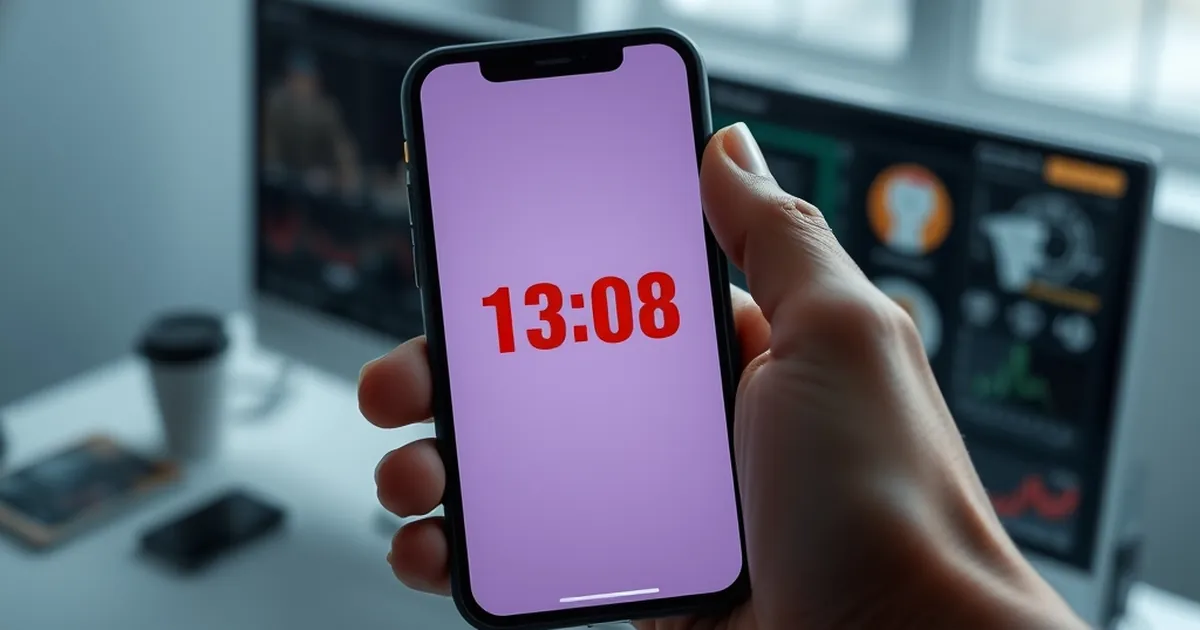
The countdown is a universal signal of impending consequence. From the red digits of a microwave to the final seconds of a penalty kick, the brain has evolved a specific, visceral response to a timer that reaches zero. In web development and app design, we use countdowns constantly: for session timeouts, payment confirmations, limited-time offers, or even the simple act of resending a verification code. But have you ever considered that the 30-second timer on your checkout page triggers the exact same neural cascade of stress and urgency as a high-stakes, split-second decision in a competitive environment?
The answer lies in the fundamental architecture of human decision-making under uncertainty. Your app’s interface is not a neutral tool; it is a behavioral apparatus. When you place a timer on a decision, you are not just creating a deadline. You are engineering a state of cognitive load, activating the brain’s threat-detection system in a way that can either optimize user flow or catastrophically derail it. Understanding this neuroscience is no longer optional for developers who want to build systems that are both effective and ethically sound.
The Neuroscience of the Ticking Clock
To understand why a simple timer feels so potent, we must first look at the brain’s primary stress response system: the hypothalamic-pituitary-adrenal (HPA) axis. When a user perceives a threat—and a countdown to a potential loss (like losing a cart item or a form submission) is processed as a threat—the amygdala sends a distress signal to the hypothalamus. This triggers the release of cortisol and adrenaline.
The Dual Pathways: Threat vs. Challenge
Not all stress is bad. The Yerkes-Dodson law, a century-old principle in psychology, posits that performance increases with physiological or mental arousal, but only up to a point. A moderate timer creates a challenge state. The user feels focused, alert, and capable. The heart rate increases, but the blood vessels dilate, allowing more oxygen to the brain. This is the ideal zone for a quick, low-stakes decision like confirming an email address.
However, when the stakes are high and the timer is too short, the brain shifts into a threat state. Here, the blood vessels constrict, resources are diverted from the prefrontal cortex (the seat of rational planning) to the midbrain (the seat of survival reflexes). The user stops thinking about the best choice and starts thinking about the fastest escape from the perceived threat. This is the exact neural pattern observed in competitive, high-pressure scenarios where players must act under a ticking clock.
The Role of the Anterior Cingulate Cortex (ACC)
The ACC is a region of the brain heavily involved in error detection, conflict monitoring, and the subjective feeling of “tension.” Neuroimaging studies have shown that the ACC becomes highly active when a person is presented with a decision under time pressure, especially when the consequences of inaction are negative. This is not just “stress” in a vague sense; it is a specific neural signal of uncertainty combined with urgency.
Your app’s timer hijacks this system. The user’s ACC fires, the amygdala activates, and suddenly, a simple form submission feels like a final-second play in a championship match. The user is no longer evaluating the product; they are fighting a clock.
Variable-Ratio Reinforcement and the "Just One More" Loop
One of the most powerful behavioral mechanisms in web design is borrowed directly from the study of operant conditioning, specifically the work of B.F. Skinner. The concept of variable-ratio reinforcement is the reason slot machines are addictive—but it is also the reason your app’s notification badge or refresh-to-load feature is so compelling.
The Dopamine Prediction Error
In a variable-ratio schedule, a reward is delivered after an unpredictable number of responses. The brain’s reward system, primarily the nucleus accumbens, releases dopamine not just when the reward arrives, but in anticipation of it. This is the “dopamine prediction error.” When the outcome is uncertain, the release is greater.
Now, apply this to a timer. Imagine a feature where the user has a limited window to perform an action (e.g., “Claim your bonus in 00:45”). The timer creates a known endpoint, but the outcome of the user’s action is still uncertain. Will they succeed? Will the system respond in time? This uncertainty, combined with the countdown, supercharges the dopamine prediction error. The user’s brain is caught in a loop: the timer creates urgency, the uncertainty amplifies the reward potential, and the brief relief of success (or the sting of failure) reinforces the entire cycle.
The "Near-Miss" Effect in User Interfaces
In competitive play, the near-miss—coming close to a goal but failing—is known to be more motivating than a total failure. The brain processes a near-miss as a “win” in the learning system, encouraging the user to try again.
In your app, a near-miss might be a user who starts a checkout process, sees the timer counting down, enters their credit card details, but fails to click “Confirm” before the timer expires. The emotional sting of that loss is disproportionately high compared to the actual stakes. This is because the timer has locked the user into a narrative of competition against the system. The near-miss is a powerful motivator for the user to attempt the entire process again, now with heightened arousal. As a developer, you must ask yourself: Are you designing a system that helps users succeed, or a system that creates manufactured near-misses to increase engagement?
Loss Aversion and the Sunk Cost of Time
Daniel Kahneman and Amos Tversky’s prospect theory tells us that losses are psychologically twice as powerful as gains. This is loss aversion. In the context of a countdown, the timer does not represent a gain; it represents an impending loss. The loss of the opportunity. The loss of the data entered. The loss of the time already invested.
The Sunk Cost Fallacy in Real-Time
Consider a user who has spent five minutes filling out a detailed form. A 60-second inactivity timer appears. The user has not only invested cognitive effort but also time. The brain now treats the form data as a sunk cost. The thought of losing that investment triggers a powerful aversive response.
This is why poorly implemented session timeouts are so destructive. They force the user into a high-stakes decision under pressure, not because the decision is inherently important, but because the time cost is already locked in. The neural stress is identical to a player who has spent 20 minutes building a strategy in a competitive game, only to face a sudden, arbitrary timer that threatens to erase all progress.
A Concrete Example: The Booking.com Effect
A well-documented example of this principle at scale is the booking platform Booking.com. For years, their interface has famously used countdown timers and scarcity cues (e.g., “3 people are looking at this room,” “Booking expires in 10:00”). While often criticized for creating anxiety, the behavioral data is clear: these timers convert at a higher rate.
A 2018 study published in the Journal of Consumer Research examined the effect of time pressure on online purchase decisions. Researchers found that a moderate time constraint (e.g., 15 minutes) increased the likelihood of purchase by reducing the user’s tendency to engage in “comparison shopping.” However, a severe time constraint (e.g., 2 minutes) led to a significant drop in conversion and an increase in post-purchase regret (cognitive dissonance). The study’s key finding was that the timer triggered the same neural stress pathways as a competitive threat, but the optimal timer was one that allowed the brain to process the threat without overwhelming the prefrontal cortex.
Designing for the Brain, Not the Clock
So, how do we apply this knowledge? The future of web development is not about removing timers—they are too useful for preventing stale data and ensuring security. The future is about designing timers that respect the brain’s limitations.
The Two-Timer Architecture
Instead of a single, monolithic countdown, implement a dual-layer system. The first timer is a warning timer (e.g., 90 seconds). This timer triggers a low-level alert, allowing the user’s ACC to register the upcoming deadline without triggering a full threat response. The second timer is a grace timer (e.g., 30 seconds). This is the actual deadline, but it is presented only after the warning has been acknowledged.
This architecture mirrors how expert players manage time in competitive scenarios: they break the countdown into manageable segments. It reduces the cognitive load and prevents the amygdala from hijacking the prefrontal cortex.
The "Pause and Save" Paradigm
The most effective way to neutralize the stress of a countdown is to remove the threat of total loss. Implement a robust auto-save feature. If a user is mid-form when the timer expires, save their input as a draft. The neural response changes instantly. The timer is no longer a threat of annihilation; it is a gentle reminder. The user’s brain shifts from a threat state to a challenge state, where the focus is on completing the task, not fighting the clock.
Variable-Scarcity Displays
Instead of a linear countdown, consider a scarcity display that updates based on real-time behavior. For example, instead of a hard 30-second timer for a limited-time offer, show a message like “High demand—availability is fluctuating.” This engages the brain’s reward system (variable-ratio) without the acute stress of a ticking clock. The uncertainty is present, but the pressure is diffused, allowing for a more deliberate decision.
The Forward-Looking Close: Ethical Behavioral Design
The line between a well-designed interface and a manipulative one is thin, and it is drawn by the developer’s understanding of the user’s neural state. We are not building games of chance. We are building tools for real people making real decisions. The research is clear: countdowns work because they exploit a deep, evolutionary stress response. As Croatian developers and designers, we have a responsibility to decide whether we use this power to create a frictionless, respectful experience or to manufacture artificial urgency.
The next time you implement a 30-second timer for a payment confirmation, ask yourself: Is this timer helping the user make a better decision, or is it forcing them into a state of neural stress that mimics a high-stakes competition? The answer will define the quality of your work and the trust your users place in you.
The future belongs to interfaces that understand the brain, not just the browser. Your code can be a source of calm, clarity, and control—or it can be a source of cortisol. The choice, as always, is yours.