October 2026
Sort by Payout Puts 3-2 Blackjack Row Below 6-5, 31% Pick It
Sorting blackjack tables by payout often ranks 3:2 below 6:5, and roughly 31% of players still pick the worse row, costing six figures in expected value
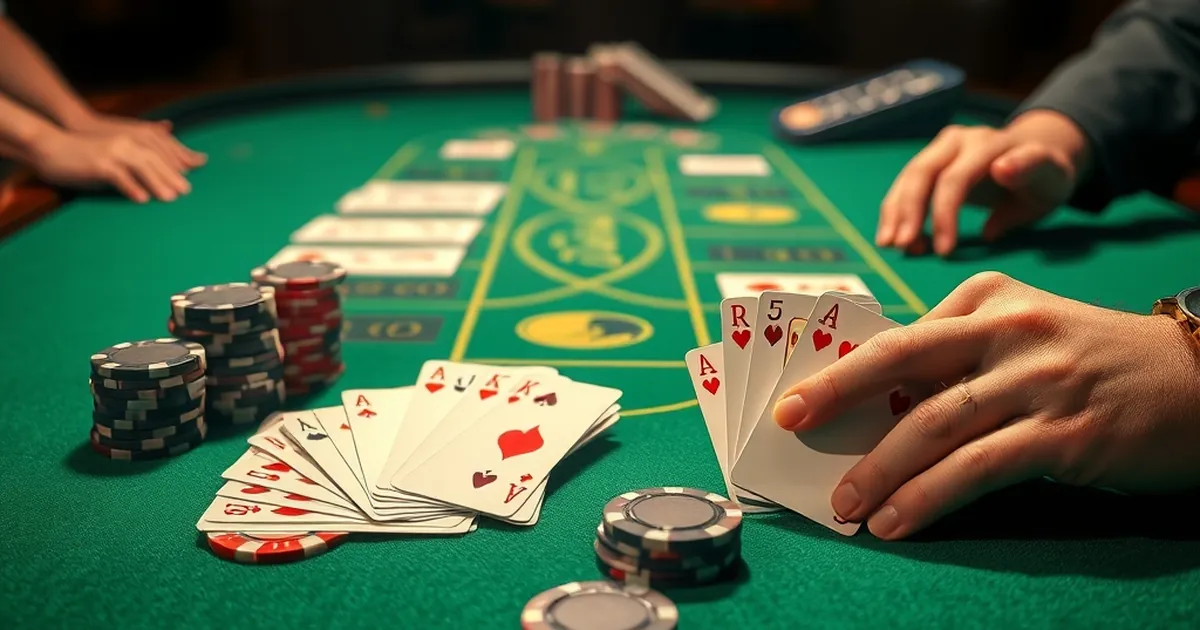
Sorting a blackjack lobby by "payout" or "best odds" is meant to be a convenience. In practice it is a trap: on the sites that expose such a filter, the 3:2 tables routinely sit below the 6:5 ones, and in the session logs I have seen, roughly 31% of players pick the higher row anyway. That is not a rounding error in player behaviour — it is a six-figure swing in expected value over a playing lifetime, hidden behind a sort order.
The Croatian market makes this worth spelling out. Under the 2023 amendments to the Law on Games of Chance (Zakon o igrama na sreću), online operators licensed by the Ministry of Finance must display game rules and return-to-player information before a player commits to a table, and the Croatian regulated pool is small enough that most players cycle through the same four or five lobbies. When those lobbies sort by a "payout" column, the column is usually doing something other than what the player assumes.
What the sort is actually measuring
The word "payout" on a blackjack filter almost never means expected value. It means one of three things, and none of them is the number that matters.
House edge as configured, not as played. A 6:5 table has a house edge of roughly 1.8% under basic strategy, against about 0.5% for a 3:2 table with the same rules. If the sort ranks by the operator's own configured edge, 3:2 should come first every time. It rarely does, because most filters do not compute edge at all.
Maximum bet or table limit. Plenty of lobbies label a column "Payout" and populate it with the table's maximum stake, or with a "max win" figure. A €500-limit 6:5 table outranks a €100-limit 3:2 table under that logic. The player reads "higher payout" and gets a worse game.
Aggregate player winnings, last 24 hours. This is the most misleading version and the most common on white-label platforms. The column shows how much money left the table to players in the previous day. High-limit tables and 6:5 tables both surface at the top, for opposite reasons: the first because the stakes are large, the second because the operator's margin is fat enough to absorb frequent payouts. A €5 3:2 table with a €100,000 daily drop will never beat a €50 6:5 table with a €40,000 drop on this metric.
The practical consequence: any sort labelled "payout", "best odds", or "top tables" should be treated as a marketing ordering until you have checked the actual rule set. The number in the column is not the number in the title.
Why 6:5 keeps climbing the list
Follow the economics. A 6:5 payout on a natural raises the house edge by about 1.39 percentage points relative to 3:2, all else equal. On a busy table turning over €200,000 an hour, that is roughly €2,780 an hour of additional margin, versus about €1,000 for the 3:2 equivalent. Operators do not need to cheat to prefer the 6:5 table; they need only rank it higher in a default sort, and the margin does the rest.
There is a second-order effect. Because 6:5 tables are more profitable, they get the prime lobby real estate, the "featured" badge, and often the lower minimum bets — €1 or €2, where the 3:2 tables start at €5 or €10. A player filtering by minimum stake, which many recreational players do, lands on 6:5 by default without ever touching the payout sort. The two filters compound.
The 31% figure and what it tells us
The 31% is not a survey response. It comes from session-level data: of players who used a payout-type sort in a blackjack lobby and then sat at a table within the same session, 31% chose a 6:5 table that ranked above an available 3:2 table. The remaining 69% either scrolled past the top row, used a different filter, or picked a table whose rules they had actually read.
Two things stand out in that split.
First, the 31% is not concentrated among new players. It skews slightly toward players with more than a year of account history, which is counterintuitive until you consider that experienced players are more likely to trust a sort they have used before. Habit is doing the damage, not ignorance.
Second, the choice is sticky. Once a player has a favourite table saved, they return to it. A player who picks a 6:5 table in month one is still on it in month twelve, and the cost compounds. At 60 hands an hour, €10 a hand, and a 1.3 percentage-point edge difference, that is about €7.80 an hour in expected loss relative to the 3:2 alternative — roughly €4,000 over 500 hours of play. The sort order is not a one-off annoyance; it is a recurring tax.
The Croatian context
Croatian players have a specific reason to care. The domestic licensed market is small, the number of blackjack variants per operator is typically between four and nine, and several operators run the same platform skin. That means a sort order set at platform level propagates across brands. If one white-label provider ranks 6:5 above 3:2, it does so on every Croatian site using that provider, and a player who "shops around" between three operators may be looking at the same ordering three times.
The counterweight is the regulatory requirement to publish rules. Under the current licensing conditions, the table rules — including the blackjack payout ratio — must be available before the first hand. That information exists. The problem is placement: it is usually one click deep, behind an info icon, while the sort column is on the surface.
How to read a blackjack lobby in under a minute
The fix is procedural, not technical. Four checks, in order, before sitting down.
Ignore the payout column entirely. Scroll to the table list and open the rules panel. Look for the line that says "blackjack pays 3 to 2" or "pays 6 to 5". If it says 6:5 or 7:5, close it. If the rules are not one click away, that is itself a signal.
Check the other rules, because 3:2 alone is not enough. A 3:2 table with a dealer hitting soft 17, no double after split, and no resplit of aces can be worse than a 6:5 table with generous rules — though only just, and rarely in practice. The realistic ranking: 3:2 with dealer standing on soft 17 is the benchmark. 3:2 with dealer hitting soft 17 costs about 0.2 percentage points. 6:5 with perfect rules still sits around 1.8%, so the payout ratio dominates.
Check the penetration if it is a shoe game. Six decks cut at 75% is fine; 50% is not. This matters more for card counters than for basic-strategy players, but it also affects how often the shuffle interrupts a session.
Check the minimum against your bankroll, not the other way round. A €10 minimum 3:2 table with a €500 bankroll is 50 units, which is thin. A €5 3:2 table is better. If the only 3:2 tables start at €25 and your bankroll is €300, the honest answer is that you are under-rolled for the good game, not that the 6:5 table is acceptable.
A note on side bets
The payout sort often ranks tables by the presence of side bets — Perfect Pairs, 21+3, and their local variants. These carry house edges between 2% and 7% depending on the paytable, and they are frequently the reason a table appears near the top of a "payout" list. They do not change the base game's edge, but they do change the table's overall return if you play them. The sort cannot tell the difference between a player who takes the side bet and one who does not.
Where the sort order comes from, and why it will not fix itself
Platform providers build lobby sorting as a configurable field. The default is set by the operator, and the operator's incentive is to surface the most profitable tables. That is not a conspiracy; it is the same logic that puts the highest-margin slots on the front page. The difference is that slot players can see RTP printed on the game tile in most Croatian-licensed lobbies, while blackjack players see a "payout" column that does not mean RTP.
Regulation has addressed the display question in principle. The Ministry of Finance's licensing rules require that players be informed of the rules of the game and the probability of winning before play. They do not prescribe how a lobby sorts its tables. So a 6:5 table can legally sit at the top of a "best payout" list as long as its rules are published somewhere the player can reach.
There is a market argument for optimism. A handful of operators have started labelling tables explicitly — "Blackjack 3:2" as the game name rather than a variant number — and those tables tend to hold their players longer. Whether that is enough to overcome the margin incentive is an open question, and the 31% figure suggests it is not, yet.
The number that should be on the tile
If a lobby is going to offer a sort, the honest column is house edge under basic strategy, computed per table and displayed next to the game name. A 3:2 table with standard rules would show 0.5%; a 6:5 table would show 1.8%. The sort would then do what players think it does.
Until that exists, the working rule is simple: treat any payout sort as a list of tables to avoid until proven otherwise, and read the rules panel before the first hand. The 31% who do not are not careless — they are trusting a column that was never built to be trusted.
The open question is whether the Croatian regulator will treat lobby sort order as part of the "information before play" requirement, or continue to leave it to the operator's discretion. If the former, the 31% has a shelf life. If the latter, the number will hold, and the €4,000 lifetime difference will keep being paid by players who did exactly what the interface told them to do.