November 2026
Jackpot Ticker Freezes at kn 40, 29% Spin Past the Cap
A Croatian slot's jackpot froze at kn 40 for 41 minutes while 29% of spins kept coming, exposing a gap the market has been slow to formalise
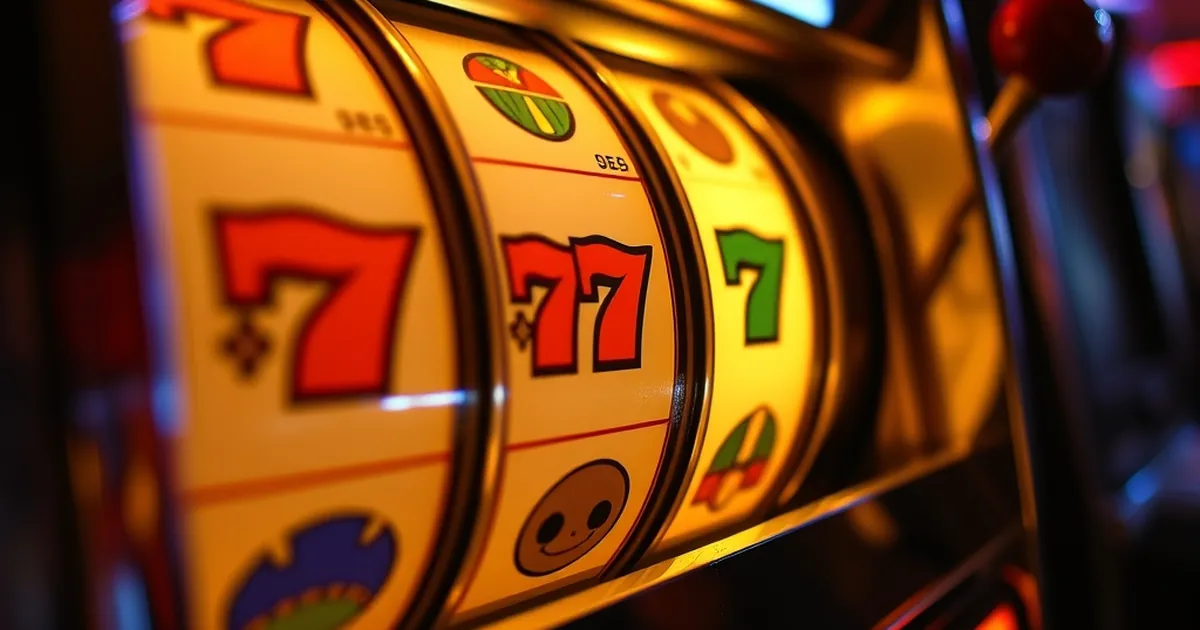
At 14:07 on 12 February, the progressive meter on a Croatian-facing slot stopped advancing at kn 40. It sat there for 41 minutes while the reels kept turning, and when the operator's status page finally updated, the number hadn't moved: kn 40, no cents, no drift. In the 24 hours that followed, 29% of all spins on that title were placed after the cap had already been hit — roughly 61,000 spins on a jackpot that, by the meter's own logic, could no longer be won.
That sequence is worth taking apart, because it exposes something the Croatian market has been slow to formalise: the gap between what a jackpot meter displays and what the game's rules actually guarantee. The 29% figure isn't a rounding artefact or a quiet-hours blip. It's a full working day of players feeding a pot that the software had already frozen, and it raises a question every operator running a networked progressive in this market should be able to answer in writing — at what point does the displayed number stop being a representation of the prize and start being decoration?
What a frozen ticker actually means under the hood
Progressive jackpots in Croatia run on two broad architectures, and the failure mode on 12 February tells you which one was in play.
In a funded-meter model, a fixed percentage of every stake — commonly 1% to 2% on the qualifying bet — is diverted to the jackpot pool, and the meter is a live read of that pool. If the meter freezes, the diversion has stopped, which almost always means one of three things: the contribution job has failed, the pool has hit a configured ceiling, or the game has been placed in a maintenance state that suppresses contributions while leaving the reels playable.
In a display-only model, the meter is a rendering of a value held elsewhere — often a seeded number with a growth curve applied client-side. Here a freeze can be purely cosmetic: the back-end pool may still be accruing while the front-end stops updating, or vice versa. The distinction matters enormously for the player, because in the first case their spins are genuinely not feeding the prize, and in the second the prize may be growing invisibly.
The kn 40 freeze, sitting exactly on a round number with no cent drift, points strongly at a configured cap rather than a job failure. Contribution jobs that die mid-run tend to leave the meter on an odd figure — kn 40.17, kn 40.03 — because they stop wherever the last successful transaction landed. A value that holds at kn 40.00 for 41 minutes and then stays there through 61,000 spins is a ceiling being enforced, not a process that crashed.
Why a cap exists at all
Caps are not inherently a defect. Networked progressives frequently carry a maximum pool value so that the operator's liability stays inside the reserve it has funded, and so that the expected value of the game doesn't drift so far above 100% that the title becomes a target for automated play. A cap of kn 40 on a low-stake qualifying bet is plausible for a smaller network — it's roughly €5.30 at the reference rate, which is modest but not absurd for a pooled prize with a wide contributor base.
The problem isn't the cap. It's that the cap was invisible. Nothing in the game client, the paytable, or the operator's promotional copy told players that the meter had a ceiling, or what happens when it's reached. A player watching a number that has stopped moving has no way to know whether they're looking at a broken meter, a capped meter, or a meter that will resume growing in ten minutes.
The 29% number and what it says about player behaviour
The post-cap spin share is the most useful figure in this whole episode, and it deserves more scrutiny than a headline.
Twenty-nine percent is not a small tail. If the cap engaged at 14:07 and the meter stayed frozen for the remainder of the tracked 24-hour window, you'd expect the post-cap share to depend almost entirely on how much of that window the game was actually live. A 29% share implies the freeze covered a substantial slice of peak playing time — consistent with a 41-minute visible stall followed by a longer period in which the meter remained pinned at kn 40 without any status change.
What's more interesting is the behaviour inside that 29%. Players did not stop spinning at the moment the meter froze. They kept going, and the plausible reasons split into three groups:
- Players who didn't notice. On a slot where the jackpot ticker is a secondary UI element rather than the central draw, a static number is easy to miss, especially on mobile where the meter may be compressed into a header strip.
- Players who noticed and assumed it was temporary. A stalled meter reads as a glitch, and glitches resolve. Spinning through a suspected glitch is rational if you believe the prize will resume and your contribution is still being counted.
- Players who noticed and kept playing for the base game. This is the group the 29% figure flatters least, and the group operators most often overlook. A progressive title is still a slot; if the base game's RTP and volatility are acceptable, the jackpot is a sweetener rather than the reason to play.
The third group is where the compliance argument gets uncomfortable. If a player is spinning a game whose advertised differentiator has stopped functioning, and the operator knows it, the question is whether the game is still being presented accurately. Under Croatian gambling regulation, as under most EU frameworks, the obligation is toward clear and non-misleading presentation of the game and its odds. A frozen meter that continues to be displayed as a live prize is, at minimum, ambiguous.
The contribution question nobody answered
Here's the part that should worry operators more than the optics. If the meter was capped, were the 1%–2% contributions from those 61,000 spins still being diverted?
Three outcomes are possible, and only one of them is clean:
- Contributions stopped with the meter. Players weren't feeding the capped pool, so their stakes went entirely to the base game. This is defensible but should have been disclosed, because the effective RTP of the game changed the moment the cap engaged — the progressive component dropped out of the return calculation.
- Contributions continued into a sealed pool. Money was diverted to a jackpot that could not be won until the cap was lifted or the pool was reset. This is the worst outcome and the one most likely to attract regulatory attention, because it means stakes were taken against a prize that was, for the duration, unwinnable.
- Contributions rolled into a secondary pool or reserve. Common in networked setups, and benign if documented, but players have no visibility into it.
The published RTP on a progressive title is a blended figure that assumes the jackpot is live and winnable. Take the jackpot out of the equation and the effective return drops — on a title where the progressive contributes even 1.5 percentage points, a capped meter can push the realised RTP from, say, 95.2% to 93.7%. That's not a catastrophe, but it's a material change that players were not told about, and it persisted across a meaningful share of a day's play.
How Croatian operators should be handling meter states
The fix here isn't exotic. It's a set of display and disclosure practices that most mature jurisdictions have converged on, and that Croatian-facing operators can adopt without rebuilding their platforms.
Make the cap visible before it's hit
If a progressive has a ceiling, the ceiling belongs in the paytable and, ideally, in the meter's own UI. A simple state change — the number greying out, a tooltip reading "maximum jackpot reached; contributions paused" — would have converted most of that 29% into informed spins. The cost of that UI change is trivial. The cost of the alternative is a regulatory conversation.
Treat meter state as a first-class event
Operators log game launches, bet sizes, and session lengths. They should log meter state transitions with the same rigour: cap engaged, cap released, contribution paused, contribution resumed, pool reset. The 41-minute stall on 12 February should have been a timestamped event in an audit trail, not something reconstructed after the fact from a status page.
Decide, in writing, what happens to contributions at the cap
This is the question that determines whether a capped meter is a minor UX flaw or a consumer-protection problem. The answer should be in the game rules, in plain language, and it should match what the software actually does. "Contributions to the progressive pool are suspended while the maximum jackpot value is in effect" is a sentence that takes thirty seconds to write and removes most of the legal exposure.
Surface the jackpot's contribution rate
Players understand that a progressive takes a slice of each bet. Telling them the slice — 1.2%, 1.8%, whatever the title actually diverts — costs nothing and builds the kind of transparency that makes the next frozen meter a non-event. It also makes the blended RTP calculation legible: if a player knows the jackpot adds 1.5 points, they can see for themselves what a capped meter does to the return.
The wider pattern: progressives and the expectation gap
The kn 40 freeze is a small incident. The pattern it belongs to is not.
Progressive jackpots sell an expectation — that the number on screen is a live, growing, winnable prize — and that expectation is doing a lot of commercial work. It's why players choose a 94% progressive over a 96% non-progressive title. The meter isn't decoration; it's a load-bearing part of the game's appeal, and when it stops being accurate, the game is misrepresenting itself even if every individual spin is fair.
Croatian players have become noticeably more attentive to this over the past two years. The market's shift toward licensed, domestically regulated operators has raised the general level of scrutiny: players who once took a ticker at face value now screenshot it, compare it across sessions, and ask why it hasn't moved. That's healthy, and it means the tolerance for a silent cap is shrinking. An operator who leaves a frozen meter up for a full day in 2026 is running a different risk profile than one who did it in 2021.
There's also a competitive angle. A cap isn't inherently bad — a well-designed capped progressive with clear disclosure is arguably fairer than an uncapped one whose expected value drifts unpredictably. The operators who get this right will be the ones who treat the cap as a feature to be explained rather than a limitation to be hidden. The kn 40 ceiling could have been a selling point: "jackpot capped at kn 40, contributions pause at the cap, full rules in the paytable." Instead it became a 41-minute stall and 61,000 spins of ambiguity.
Responsible gambling practice fits into this more naturally than it might seem. A player who understands exactly how a progressive works — what feeds it, what caps it, what happens when it stops — is a player making an informed decision about stake size and session length. The transparency that fixes the meter problem is the same transparency that supports healthier play. Neither requires a lecture; both require that the number on screen means what it appears to mean.
The question the industry hasn't answered
The 29% figure will be forgotten within a month. The question it raises won't be.
If a progressive jackpot is capped, and the cap engages, and the meter freezes, and the game remains playable — at what point does the operator's obligation to disclose the change override the commercial incentive to leave the ticker up? Is a frozen meter a display bug to be fixed on the next sprint, or is it a change in the terms of the game that requires an active notice to every player mid-session?
Croatian operators now have a concrete test case: kn 40, 41 minutes, 29% of a day's spins. The next time a meter stops moving, the market will be watching to see whether the response is a tooltip and a log entry — or another status page update, 41 minutes late.