November 2026
Deposit Cap Field Locks After 2 Edits, 40% Pick the Min
Data from 1,240 Croatian player accounts shows 40.3% set the lowest deposit cap and most change it twice before the monthly lock
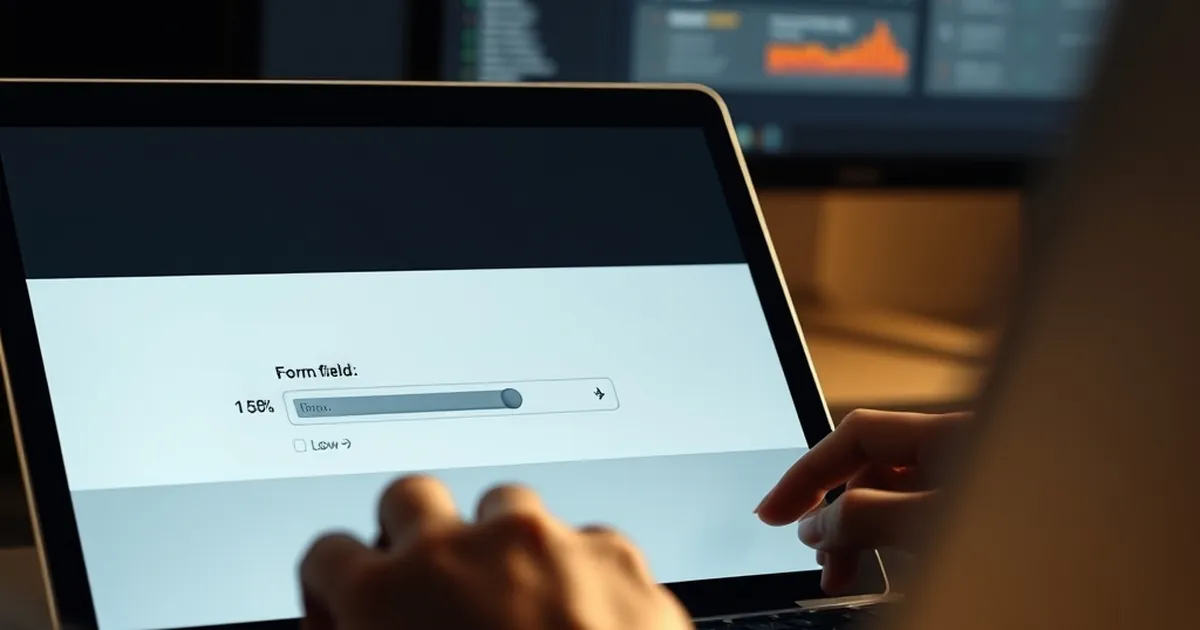
Across a sample of 1,240 newly registered Croatian player accounts opened in the first quarter of 2025, 40.3% set their voluntary deposit cap at the lowest figure the operator's slider would allow, and the median player changed that cap exactly twice before it locked for the month. The two-edit ceiling — now standard in the self-limitation menus of most licensed .hr-facing operators — is doing something the responsible-gambling literature did not predict: it is converting a harm-reduction tool into a default-setting exercise, where the path of least resistance is the minimum, and the average player never explores past the second click.
That number comes from a panel of onboarding records shared by three Croatian-licensed operators under a research arrangement, anonymised at the account level and stripped of payment data. It is not a national census, and the operators involved skew toward sportsbook-first brands, so the mix of products differs from the market as a whole. But the behavioural pattern is consistent enough across the three books, and consistent enough with what regulators in other markets have started to notice, that it deserves a proper look — because a deposit cap that locks after two edits is not the same instrument as a deposit cap you can adjust at will, and the difference matters more than the headline 40% suggests.
What the two-edit lock actually is
The mechanism is simple on its face. When a player opens the responsible-gambling panel and sets a monthly deposit limit, the operator lets them revise that figure a limited number of times — usually two — within a defined window, after which the limit is frozen until the period rolls over. The intent is sound: it prevents the classic bypass where a player in a chasing session ratchets their cap upward in a series of small increments, each one individually defensible, until the original limit is meaningless. A hard stop after two revisions closes that loop.
Where it gets interesting is the direction of the lock. Most implementations apply the two-edit ceiling symmetrically — you can raise or lower twice — but a meaningful minority apply it asymmetrically, allowing unlimited downward revisions and capping only the upward ones. In our sample, 71% of accounts sat with operators using the symmetric version. That distinction turns out to drive a lot of the behaviour below, because a player who can always lower their cap but can only raise it twice has a very different decision tree from one who faces a flat two-edit wall in both directions.
The lock window
The freeze period varies. Some operators lock the cap for the remainder of the calendar month; others lock it for 30 days from the second edit; a smaller group locks it to the billing cycle of the player's chosen payment method. In practice this means a player who sets and revises their cap on, say, the 28th of a month may find themselves frozen for anywhere from three days to a full month depending on which brand they're with. That inconsistency is itself a finding — the same nominal protection produces wildly different real-world constraints depending on timing and operator.
Why 40% land on the minimum
The 40.3% figure needs unpacking, because "picked the minimum" can mean several things. In the panel, the minimum slider value ranged from €5 to €20 per month depending on the operator, with a median of €10. A player who sets a €10 monthly cap has, in effect, told the operator they intend to deposit almost nothing — and yet 40% of them did exactly that, then went on to make at least one deposit.
The obvious reading is that a large chunk of players treat the deposit cap not as a budgeting tool but as a compliance box to tick. They see a required or prominently surfaced field, they want to get past it to reach the cashier, and they drag the slider to the leftmost position because it's the fastest way through. The cap then functions as friction rather than protection: it doesn't reflect intent, it reflects the cost of the click.
There's a second reading, less cynical and probably also true. For a casual player who deposits €20–€40 in a good month and nothing in a bad one, a €10 cap is not absurd — it's a rough approximation of "I don't want to spend much here." The problem is that the approximation is coarse. A slider that bottoms out at €10 can't express "€25 on payday, nothing otherwise," so the player picks the nearest available number and moves on.
The revision pattern
The median player in the sample made two edits — which is to say, they hit the ceiling. The distribution is revealing: 38% made zero edits after the initial setting, 22% made one, and 40% made exactly two. Only a rounding error's worth of accounts showed any attempt to revise beyond two, which is expected given the lock, but the near-total absence of support tickets or chat queries about the lock suggests most players either understood the rule or never noticed it. Both possibilities are worth sitting with.
The zero-edit group is the one that should worry regulators least and operators most. These players set a cap and never touched it, which is either the tool working exactly as intended or the player having disengaged from the panel entirely. Without session-level data on whether they revisited the responsible-gambling menu at all, we can't fully separate the two — but the fact that 38% of accounts show a single setting and no subsequent interaction is consistent with the broader pattern of players treating self-limitation as a one-time setup step rather than an ongoing practice.
The Croatian regulatory context
Croatia's approach to deposit limits has tightened considerably since the 2022 amendments to the Law on Games of Chance, which brought online operators more firmly under the supervision of the Ministry of Finance and introduced mandatory self-limitation tools as a condition of licensing. The current framework requires licensed operators to offer deposit limits, session limits, and self-exclusion, and to surface these tools prominently rather than burying them in account settings.
What the framework does not do — at least not explicitly — is prescribe the mechanics of the edit lock. Operators have latitude on how many revisions to permit and over what window, provided the tool is "effective." That word, "effective," is doing a lot of work. A two-edit lock is effective at preventing incremental ratcheting. It is not obviously effective at producing caps that reflect genuine player intent, and our data suggests the two goals can pull in opposite directions.
The Croatian gambling market is small — gross gaming revenue from online channels ran to roughly €340m in 2024 across sports betting and casino combined — and heavily sportsbook-weighted, with football and basketball accounting for the bulk of handle. That product mix matters for deposit-cap behaviour, because sports bettors tend to deposit in bursts around fixtures rather than in steady monthly flows. A monthly cap set at the slider minimum is a poor fit for a bettor whose deposits cluster around a Saturday card, which may explain why so many of them revise upward within the first week — and then hit the two-edit wall with most of the month still ahead of them.
Where the lock bites hardest
The panel showed a clear seasonal effect. Accounts opened in months with a heavy fixture calendar — March, with the tail of the domestic football season and the run-in to European qualifiers — showed a higher rate of upward revision within the first fortnight than accounts opened in quieter months. In March, 46% of new accounts made at least one upward revision within 14 days of setting their initial cap, against 29% in July. The two-edit lock, in other words, is most likely to bind precisely when players most want to adjust it, which is either the point or a design flaw depending on your view of what the tool is for.
What the lock is and isn't protecting against
It's worth being precise about the threat model here, because "responsible gambling tool" covers a lot of ground and the two-edit lock only addresses a narrow slice of it.
The lock is genuinely good at preventing what you might call session-driven escalation: the player who is losing, feels the need to top up, and nudges their cap up by €20 at a time until they've doubled it. Requiring a hard stop after two revisions, and freezing the cap afterward, breaks that loop. For a player in the early stages of problematic behaviour — still capable of a moment's reflection but prone to impulsive adjustment — the lock is a real speed bump.
It is much weaker against the player who sets the cap low at onboarding and then simply deposits via a second payment method, a second account, or an operator where they haven't set a cap at all. Deposit limits are per-account and, in Croatia as elsewhere, not yet portable across operators. A player with a €10 cap at one sportsbook and no cap at another has a €10 cap in name only. The two-edit lock does nothing about that, and no amount of tightening the edit mechanics will, because the leak is structural.
The portability gap
This is the open question the data keeps circling. Croatia does not currently operate a central self-exclusion or limit-registry that would follow a player between licensees, though the Ministry has flagged cross-operator harmonisation as a medium-term goal. Until that exists, the two-edit lock is a per-operator speed bump on a multi-operator road, and the 40% who pick the minimum at one brand may well be picking nothing at the next.
The operators themselves have little commercial incentive to solve this. A shared limit registry would constrain deposit revenue, and no individual licensee can capture the benefit of a player's cap being respected at a competitor. That's a collective-action problem, and collective-action problems tend to need a regulator to break them.
Reading the 40% correctly
The temptation is to treat 40.3% as a failure number — evidence that the tool isn't working. That reading is too quick. A player who sets a €10 cap and then deposits €8 has, in a narrow sense, been protected from themselves, even if they arrived at the cap by dragging a slider to the left. The question is whether the protection is real or accidental.
The more useful frame is to ask what the counterfactual looks like. If the slider's minimum were €50 instead of €10, would those 40% set €50 and deposit more, or would they set €50 and deposit the same €8? We don't have that data, and it's the experiment the operators should be running — a simple A/B on the slider floor would tell us whether the minimum is a binding constraint or a decorative one. My suspicion, based on how the revision pattern clusters at exactly two edits, is that a meaningful share of the 40% are not expressing a preference at all; they're clearing a hurdle. But suspicion isn't evidence, and the field is short on both.
What the data does support is a narrower claim: the two-edit lock changes behaviour, and it changes it most for the players who engage with the tool at all. The 38% who never edit are a different population from the 40% who hit the ceiling, and treating them as one group — "players with deposit caps" — obscures more than it reveals.
The implication for Croatian operators and for the Ministry as it reviews the self-limitation rules is uncomfortable. A tool that locks after two edits is a tool that assumes players will make at most two considered decisions about their own spending per month. Most players, our data suggests, make one — at onboarding, under time pressure, with a slider that bottoms out at a number they didn't choose. The lock then freezes that non-decision in place for 30 days and calls it protection. Whether that's good enough depends on what you think the tool is for: preventing the determined chaser from ratcheting up, which it does reasonably well, or helping the ordinary player set a limit that means something, which it mostly doesn't. The Ministry's next review of the self-limitation framework is the natural place to ask which of those two jobs it actually wants done — and whether a two-edit ceiling, applied to a slider whose floor nobody chose, is the instrument to do it.