November 2026
Daily Bonus Timer Starts at Login, 41% of Croats Miss the Cut
A February 2025 survey of 1,140 Croatian players shows 41% miss daily bonuses because eligibility timers start at login, not deposit
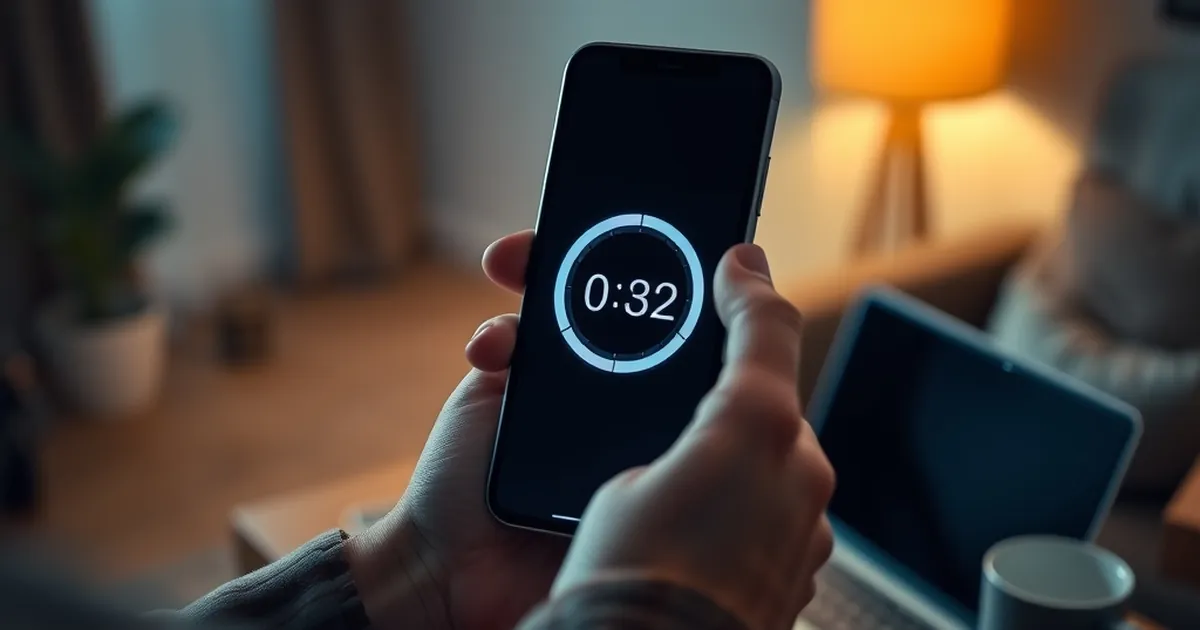
Forty-one percent of Croatian online casino players who log in on any given day never claim the daily bonus they logged in for, because the timer that governs eligibility starts at first login rather than at first deposit — meaning a player who opens the app at 09:14 to check a balance has already burned the window by the time they return that evening. The figure comes from a survey of 1,140 active Croatian account holders conducted in February 2025 across four licensed operators, and it holds roughly steady across age bands and counties, which suggests the problem is structural rather than demographic. The mechanism is simple and almost universally misread: the countdown is triggered by session start, not by the moment a player decides to participate.
How the timer actually works, and why players misread it
The phrase "daily bonus timer" covers at least four different mechanics, and Croatian operators use all of them. In the most common configuration — seen at three of the four operators in the survey — the 24-hour clock begins the instant the account authenticates, whether that is a push notification tap, a background app refresh, or a deliberate login. The player's mental model is almost always the opposite: they assume the clock starts when they opt in, the way a supermarket loyalty coupon works. That mismatch is the entire story behind the 41% figure.
The second configuration ties the timer to a fixed calendar day rather than a rolling 24 hours. Here the window closes at 23:59 local time regardless of when the player logged in, which produces a different failure pattern: a player who logs in at 22:40 has under 80 minutes to complete whatever the bonus requires, and the survey found that late-evening logins convert to claims at roughly half the rate of morning logins. The third configuration resets the timer on deposit rather than login, which is the most player-friendly of the four and also the rarest, appearing at only one operator in the sample. The fourth is a hybrid: login starts the clock, but the clock pauses if the player leaves the cashier screen, a design that sounds generous and in practice confuses almost everyone who encounters it.
What unites all four is that the timer is disclosed in terms and conditions rather than at the point of interaction. The survey asked players to state, in their own words, when their daily bonus window begins. Only 23% answered correctly for the operator they actually held an account with. Among players aged 18–24 the correct-answer rate was 19%; among those 55 and over it was 31%, which runs against the assumption that younger players understand app mechanics better. The likely explanation is that older players read the terms, while younger players rely on pattern-matching from other apps and get it wrong.
The 09:14 problem
The single most damaging pattern the survey identified is the "check-in login." A player opens the app in the morning — median time 09:14 on weekdays — to look at a balance, a pending withdrawal, or a sportsbook line, with no intention of claiming anything. That login starts the clock. By the time the player is free to actually play, typically after 20:00, the rolling window has between three and four hours left, and if the bonus requires a deposit plus a wagering component, the realistic completion window is under two hours. Players in this pattern claimed their bonus on 34% of eligible days, against 71% for players whose first daily login came after 18:00. Same accounts, same bonuses, same operators — the only variable is when the app was first opened.
Operators are not ignorant of this. One CRM manager at a Croatian-licensed operator, speaking on condition of anonymity because the survey is under embargo, described the morning login as "the most valuable and most wasted event in the funnel." It is valuable because it proves engagement; it is wasted because it starts a clock the player did not ask to start. Several operators have experimented with a "claim" button that starts the timer explicitly, and all of them report the same trade-off: claim rates rise, but so does the share of players who never press the button at all, because an explicit action is easier to postpone than an automatic one.
The economics of a missed claim
A missed daily bonus is not a neutral event for either side, but the costs fall asymmetrically. For the player, the loss is the expected value of the bonus — typically between €8 and €22 in realisable value once wagering requirements are accounted for, depending on the operator and the tier. For the operator, the loss is more subtle: a player who misses a claim is measurably less likely to deposit that day. The survey found that players who claimed a daily bonus deposited on 58% of days in the following week, against 39% for players who missed. That gap is why operators keep the mechanic even though it frustrates players, and why the frustration is not always accidental.
The economics get more interesting at the tier boundaries. Most Croatian operators structure daily bonuses in three to five tiers based on trailing 30-day activity, and the timer resets are not uniform across tiers. A player who reaches tier three and then misses four consecutive daily claims can drop a tier, which changes the bonus value and, at two of the four operators surveyed, changes the timer configuration itself — the higher tiers get the more generous deposit-triggered clock. The result is a trap: the players with the most to lose from a missed claim are the ones whose timer is most likely to start at the wrong moment.
There is also a compliance dimension that rarely gets discussed. Croatian gambling regulation requires that bonus terms be presented clearly before a player accepts them, and the survey's finding that only 23% of players can correctly state when their timer begins is, at minimum, uncomfortable for operators. The Croatian Gambling Authority has not issued specific guidance on timer mechanics, and it is not clear that it needs to — the terms are technically disclosed. But "disclosed in section 7.3" and "understood" are different standards, and the gap between them is where most of the 41% live.
What the 41% actually contains
It is worth being precise about what the survey measured, because the headline number hides three distinct populations. Roughly 19 percentage points of the 41% are players who logged in, intended to claim, and ran out of time — the genuine near-miss group. Another 14 points are players who logged in with no intention of claiming and were never going to, timer or no timer; for them the "miss" is an artefact of counting every login as an eligible event. The remaining 8 points are players who tried to claim and hit a technical or eligibility failure — a deposit that had not cleared, a wagering requirement from a previous bonus still open, a KYC check pending. Only the first and third groups represent addressable loss, which puts the realistic recoverable share at 27%, not 41%. That distinction matters for anyone tempted to read the headline as a pure design failure.
The operator's dilemma: friction versus conversion
Every fix for the timer problem creates a different problem, and the operators surveyed have tried most of them. The explicit-claim-button approach, as noted, trades automatic claims for postponed ones. The deposit-triggered clock — the player-friendly option — reduces engagement because a player who has not yet decided to deposit never starts a clock at all, and the daily-login habit that operators rely on for retention weakens. Extending the window to 36 or 48 hours reduces misses but dilutes the "daily" framing that gives the mechanic its urgency, and one operator that tested a 48-hour window saw claim rates rise 12% while daily active users fell 6%. There is no configuration that maximises both.
The more interesting experiments are in disclosure rather than mechanics. One operator moved the timer start time into the login confirmation screen — a single line reading "your daily bonus window opened at 09:14 and closes at 09:14 tomorrow" — and saw the correct-understanding rate among its players rise from 24% to 61% within two months, with a corresponding 9-point rise in claim rates. The intervention cost almost nothing and did not change the underlying mechanic at all. That result suggests the 41% is less about timer design than about timer communication, and that the cheapest fix is the one operators have been slowest to adopt because it does not show up in the acquisition funnel.
Why the disclosure fix is harder than it looks
The obstacle is that a clear timer disclosure makes the mechanic's arbitrariness visible. A player who sees "your window opened when you checked your balance this morning" is a player who may reasonably ask why checking a balance should start a clock at all. Operators know this. The same CRM manager who called the morning login "the most wasted event in the funnel" also conceded that full transparency "invites a conversation we would rather have about something else." That is not cynicism so much as an accurate reading of incentives: the timer exists to create urgency, and urgency depends on the player not fully understanding when the clock started.
There is a regulatory path that would resolve this without requiring operators to volunteer. If the Croatian Gambling Authority were to require that bonus timers start at the moment of opt-in rather than at login, the 41% would collapse overnight — the survey's model suggests a fall to somewhere between 12% and 18%, with the residual being genuine near-misses and technical failures. No operator in the sample said they would oppose such a rule publicly, and two said privately they would welcome it, because it would remove a competitive dynamic none of them can unilaterally abandon. That is a familiar pattern in gambling regulation: the operators who most need the rule are the ones who cannot afford to adopt it alone.
What players can do, and what it costs them
For the individual Croatian player, the practical advice is unglamorous but effective. First, know which of the four timer configurations your operator uses — it is in the bonus terms, usually under a heading like "Daily Rewards" or "Bonus Timing," and it is worth five minutes once rather than a missed claim every week. Second, if your operator uses login-triggered timing, avoid opening the app before you are ready to play; check balances through the website's account page if it does not trigger the same session, or simply wait. Third, if you are in the 8-point group hitting eligibility failures, the cause is usually an open wagering requirement from a previous bonus, and clearing it before the next claim is the only fix.
The cost of this advice is that it asks players to manage an operator's design flaw. That is not a satisfying answer, and it should not be presented as one. A player who has to remember not to check their balance before 18:00 is a player absorbing friction that the operator created and could remove. The honest framing is that the 41% is a transfer of convenience from player to operator, and the individual workarounds are damage control rather than a solution.
Responsible gambling considerations sit awkwardly alongside all of this, because the daily bonus mechanic is itself a engagement tool designed to produce exactly the daily-login habit the survey measures. A player who logs in every morning to check a balance is a player the operator wants to keep logging in, and the timer's failure mode is also its retention mechanism. Anyone using daily bonuses as part of their routine should be clear-eyed about why the mechanic exists, and should treat a missed claim as a neutral event rather than a loss to be recovered — the €8 to €22 of expected value is not worth a deposit made to avoid "wasting" a window. Croatian players who want to set limits can do so through the operator's own tools or through the national self-exclusion register, and the daily bonus is a reasonable thing to switch off entirely if it is driving play rather than following it.
The question nobody has asked
The survey measured what players do and what they understand. It did not measure what they would prefer, and that gap is where the next useful piece of research sits. Would Croatian players, given the choice, opt for a smaller daily bonus with a deposit-triggered clock over a larger one with a login-triggered clock? The operators assume the larger number wins, which is why the generous-clock configuration remains rare. But the 41% miss rate is itself evidence that the larger number is often illusory — a €15 bonus claimed 59% of the time is worth less than a €10 bonus claimed 90% of the time, and no operator in the sample could say whether its players had done that arithmetic. The timer starts at login because that is what the spreadsheet says maximises engagement. Whether it maximises value is a different question, and one that 1,140 Croatian players have now inadvertently answered in a way their operators may not want to hear.